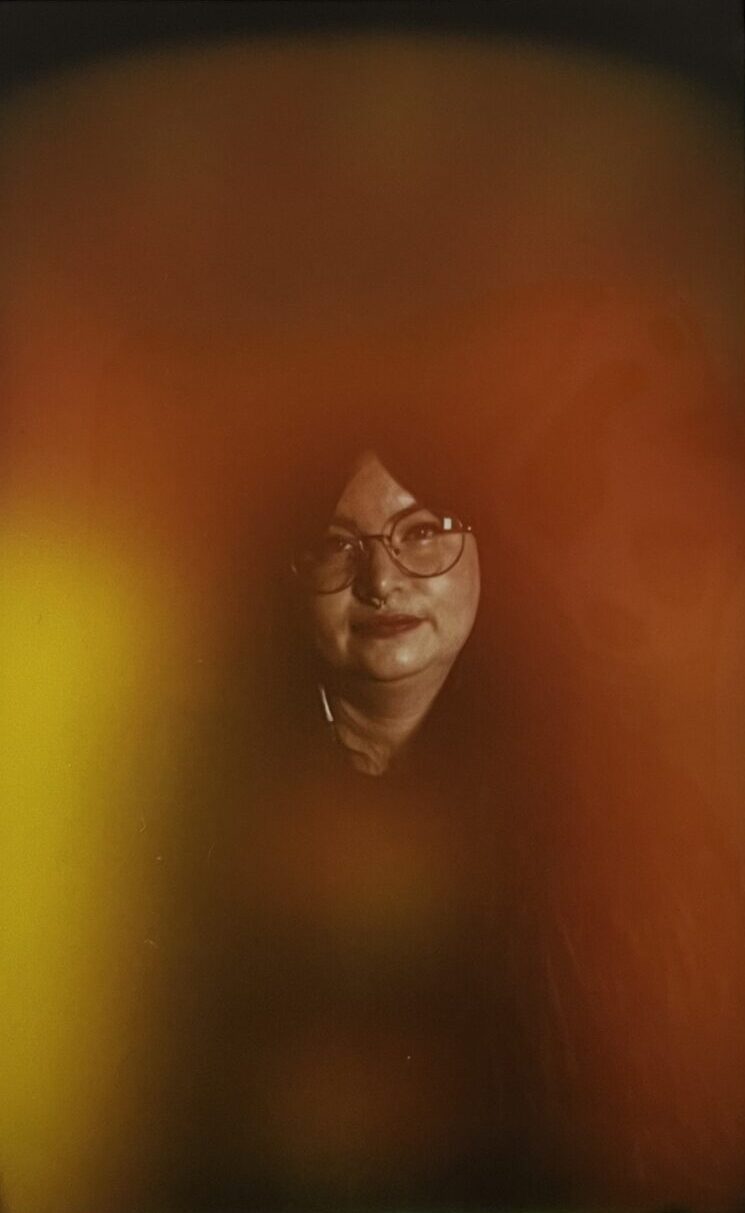
Biography
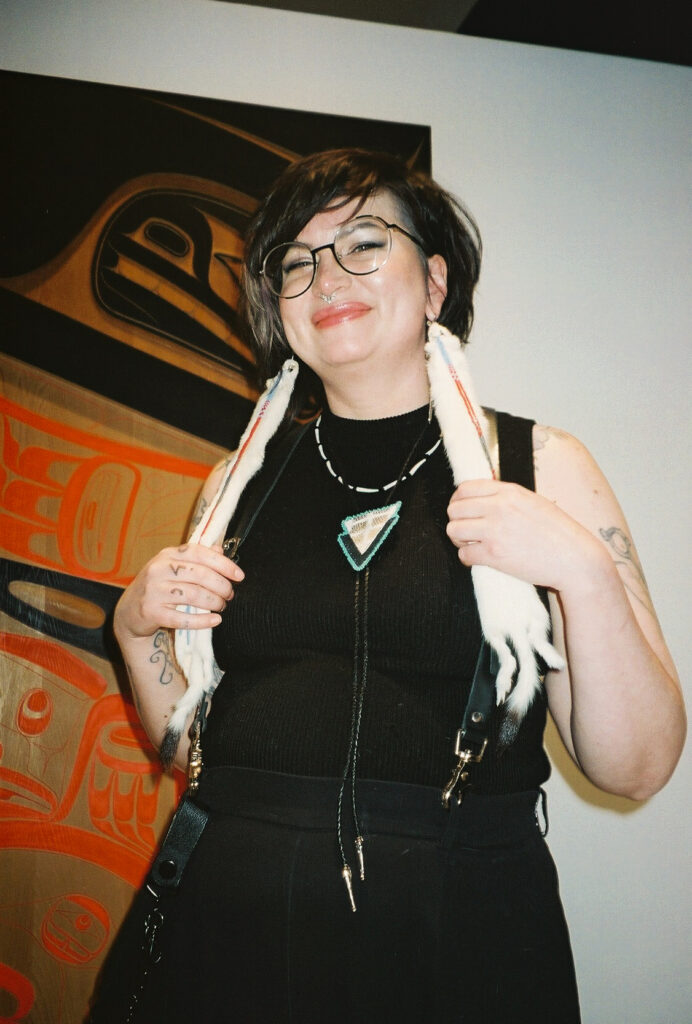
bailey macabre (they/them) is a queer, disabled, and neurodivergent agender nêhiyaw + Ukrainian born on Snuneymuxw territory, tied to Beardys & Okemasis Cree Nation near Duck Lake, SK. Their interdisciplinary practice is varied and depends greatly on whatever their current hyperfixation is.
they are an illustrator, writer, comic artist, textile worker, poet, sculptor, painter, and media artist. Much of their work focuses on themes of queer passion, Indigenous joy, intimacy, Indigenous futurism, and healing. With a penchant for bright colours, Indigenous sovereignty, and deviance in many forms, their work is multifaceted and ever changing.
they have illustrated the cover of two of Jen Ferguson’s novels published by HarperCollins, a children’s book published by Medicine Wheel Publishing, and their work has been published by The Walrus, The Capilano Review, The Yellowhead Institute, Augur Magazine, carte blanche, and more, as well as exhibited at Nanaimo Art Gallery and The View Gallery in Nanaimo, BC, Banff Centre for Arts & Creativity, The Polygon Gallery in North Vancouver, Visions Textile Museum in San Diego, and open space in Victoria.
Extended Biography
bailey macabre (they/them) was born on – and continues to work from – Snuneymuxw Territory in Nanaimo, British Columbia, on so-called Vancouver Island. they are a member of Beardy’s & Okemasis Cree Nation near Duck Lake, Saskatchewan, with deep familial ties to the Red River, Turtle Mountain, and Batoche. their lineage carries the names Gariepy, Morisette, Starblanket, Mistawasis, Parenteau, Brabant, Ayahoos, Gladu, and Desmarais, alongside Ukrainian and Romanian ancestry on their father’s side. These overlapping histories of movement, labour, and survival quietly underpin their work, shaping a practice attentive to memory, kinship, and responsibility.
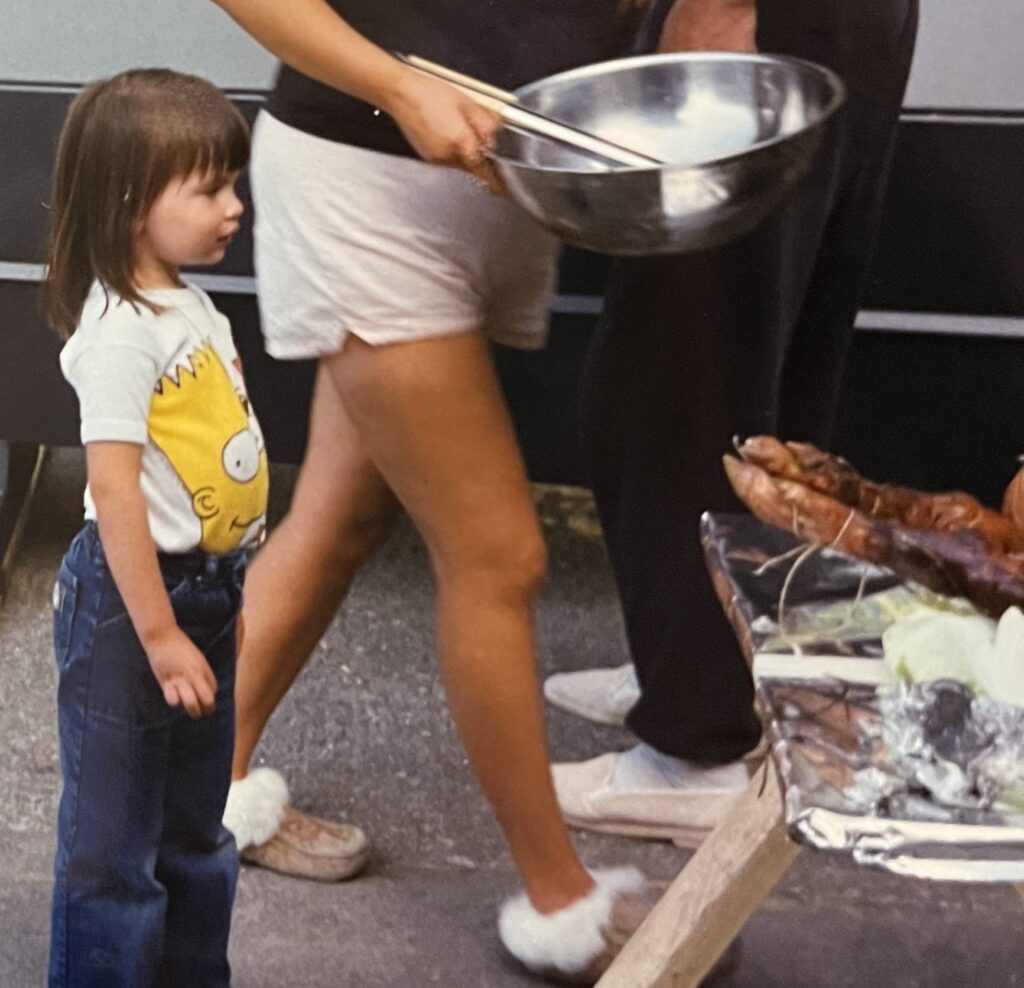
bailey’s relationship to art began early and informally, rooted in touch, curiosity, and repetition. As a child, they made sun prints using cyanotype paper, drew and painted incessantly, sculpted found materials, and learned to sew and knit from their grandmother and a beloved elder who lived across the street. Art was not framed as ambition, but as a way of being present with the world. Their family moved often, and by the time bailey reached high school they had lived in ten homes and attended seven schools. This early instability cultivated a sensitivity to place, transition, and the quiet emotional labour of adaptation – elements that continue to surface in their work.
In young adulthood, bailey followed a nonlinear path shaped by AuDHD curiosity and necessity. They earned a diploma in Media and Cultural Studies from Okanagan College and moved through a wide range of work, including body piercing, pet store management, catering, and the construction of compressed natural gas fuel lines for heavy-duty machinery. Eventually, they trained as a cosmetologist specializing in hair colour, a practice they sustained for over a decade. Throughout these years, art remained a constant companion – sometimes central, sometimes peripheral, but never abandoned. When the COVID-19 pandemic forced the closure of the salon they worked from, bailey made the decision to pursue art full time.
That shift was swift and generative. Within a short period, bailey was commissioned for beadwork, book illustration, and editorial projects across Turtle Island. While their commercial practice developed quickly, they felt an increasing tension between productivity and anti-capitalist beliefs. Rather than orienting their work toward market demand, bailey began to cultivate a studio practice invested in material process, slowness, and refusal, creating space for work that could exist beyond legibility and commodification.
A pivotal moment came when close friend Whess Harman invited bailey into their first group exhibition at open space gallery in Victoria, BC. Presenting two digital illustrations of birds, the exhibition marked the beginning of a more public artistic trajectory. In 2022, bailey received the Geoff McMurchy Artist Development Grant and Mentorship through Kickstart Disability, mentoring under Jenna Reid. This experience deepened their understanding of granting systems, funding cycles, and the sustainability of a contemporary art practice, as well as the importance of disrupting them.
bailey’s relationship with Nanaimo Art Gallery emerged through this growing practice. In 2023, they participated in Gutters Are Elastic, curated by Jesse Birch, where they presented a textile, word-based comic that combined sewing, embroidery, and the visual language of a ribbon skirt. Following the exhibition, and after working closely with the gallery team, bailey entered a fairly rigorous interview process and was hired as the Indigenous Engagement Coordinator.
In this role, bailey’s work sits at the intersection of cultural labour, institutional intervention, and community care. They have curated the Indigenous Takeover of Making Waves, the gallery’s creative speaker series, prioritizing Indigenous voices across disciplines and generations. they’ve hosted community beading circles, creating low-barrier spaces for gathering, making, and conversation. Previous programs include a drum-making workshop led by Donna Manson, as well as a wide range of workshops and classes for folks of all ages and identites. Central to bailey’s approach is the belief that Indigenous presence within institutions must be lived, relational, and accountable – not symbolic.
Around the same time, bailey began working closely with Cole Pauls and the Vancouver Comic Arts Festival. What started as an illustration for the festival’s land acknowledgement comic evolved into a leadership role, culminating in bailey becoming Director of Indigenous Programming in 2024. During this period, they contributed to the Salmon Run paper and later collaborated with Pauls on Red Paper, a zine anthology featuring a wide constellation of Indigenous comic artists. The project emphasized community, multiplicity, and the power of collective storytelling.
Alongside their developing studio practice, bailey has illustrated extensively for publications and organizations across so-called Canada and internationally. Their work includes the children’s book Minnow: The Girl Who Became Part Fish; contributions to Queers at the Table (Arsenal Pulp Press); comics for The Capilano Review, carte blanche, and Augur Magazine; and cover illustrations for novels by Jen Ferguson published by HarperCollins. Their illustrations have also appeared in Room Magazine, The Walrus, and in collaboration with organizations including the Union of BC Indian Chiefs, the Manitoba Harm Reduction Network, Seeding Sovereignty, the Yellowhead Institute, Science World, and many others.
.jpg?format=2500w)
bailey is currently curating Unsettling the Lens, an Indigenous film series at Nanaimo Art Gallery developed in partnership with the National Film Board of Canada, which foregrounds Indigenous sovereignty in storytelling and challenges extractive modes of looking. In 2026, they will co-curate their first group exhibition at Nanaimo Art Gallery alongside Jesse Birch, further extending their curatorial practice as a form of relationship-building and refusal within institutional space.
Alongside this work, bailey continues to develop their studio practice. In 2023, they presented their first solo exhibition, pakicihew (she has swollen hands), curated by Amber Fox-Morrison. The exhibition premiered at the Vancouver Island Regional Library and later travelled to The View Gallery, curated by Chai Duncan. That same year, bailey participated in Response: All Woven Together at The Polygon in North Vancouver, engaging in a film mentorship with a cohort of Indigenous emerging media artists. This culminated in a 2024 group exhibition featuring bailey’s short film ᒪᐃᐧᐦᑲᑕᒧᐐᐣ mawihkatamowin (mourning), a work that explores grief, tenderness, extraction, and existence.
bailey’s practice has since expanded into public art. they created their first temporary public artwork for Luminous Paths, curated by Jamie-Brett Sine and the City of Nanaimo, and were later accepted onto the City of Nanaimo’s 2026–2028 Urban Design Roster.
In February 2025, bailey was an artist-in-residence in the Early Career Winter Residency at the Banff Centre for Arts and Creativity. Over five intensive weeks, they finalized a two-year installation project and developed several new bodies of work. While the residency offered rare focus and momentum, it was also physically and emotionally demanding; the remainder of the year was spent resting, integrating, and allowing ideas to settle.
In 2026, bailey’s work entered an international context, with pieces from pakicihew included in a cyanotype group exhibition at the Visions Museum of Textiles in San Diego. That same year, they were accepted into the Too Two-Spirited For You Winter Institute at Plug In Institute of Contemporary Art in Winnipeg, working within an all Two-Spirit/Indigiqueer cohort under the mentorship of Adrian Stimson, with guest mentors Michelle McGeough and Barry Ace. This experience reinvigorated their practice and catalyzed several new projects currently in development.
bailey macabre’s work moves across textiles, illustration, comics, film, installation, and community-based programming. Grounded in Indigenous knowledge, disability justice, and care-based methodologies, their practice insists on tenderness as a political act, and one that honours lineage, resists extraction, and makes space for collective survival.