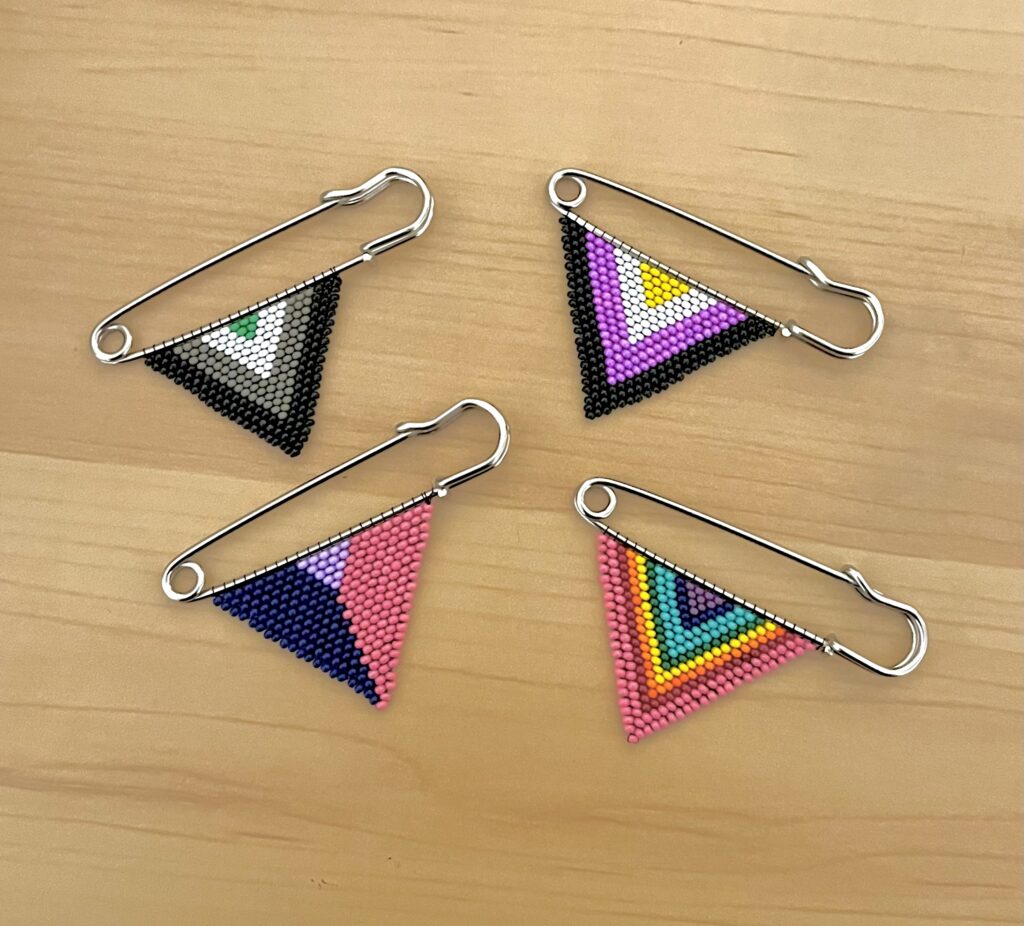
Current Work
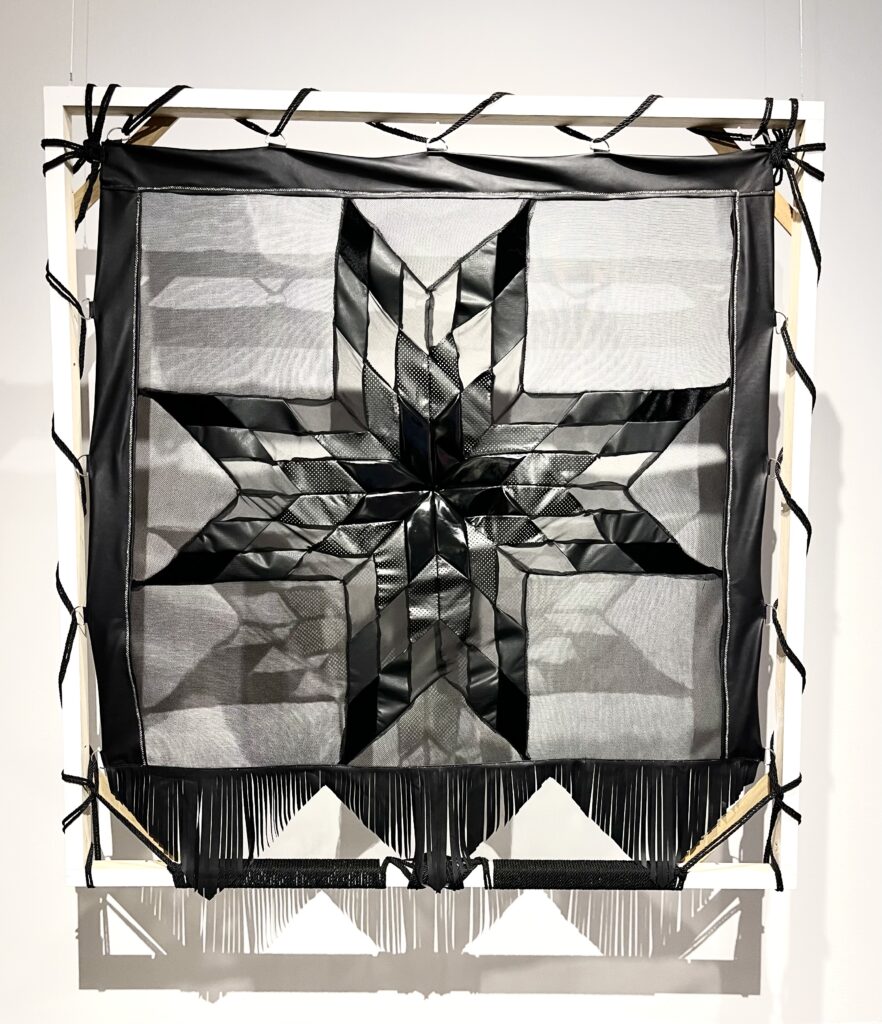
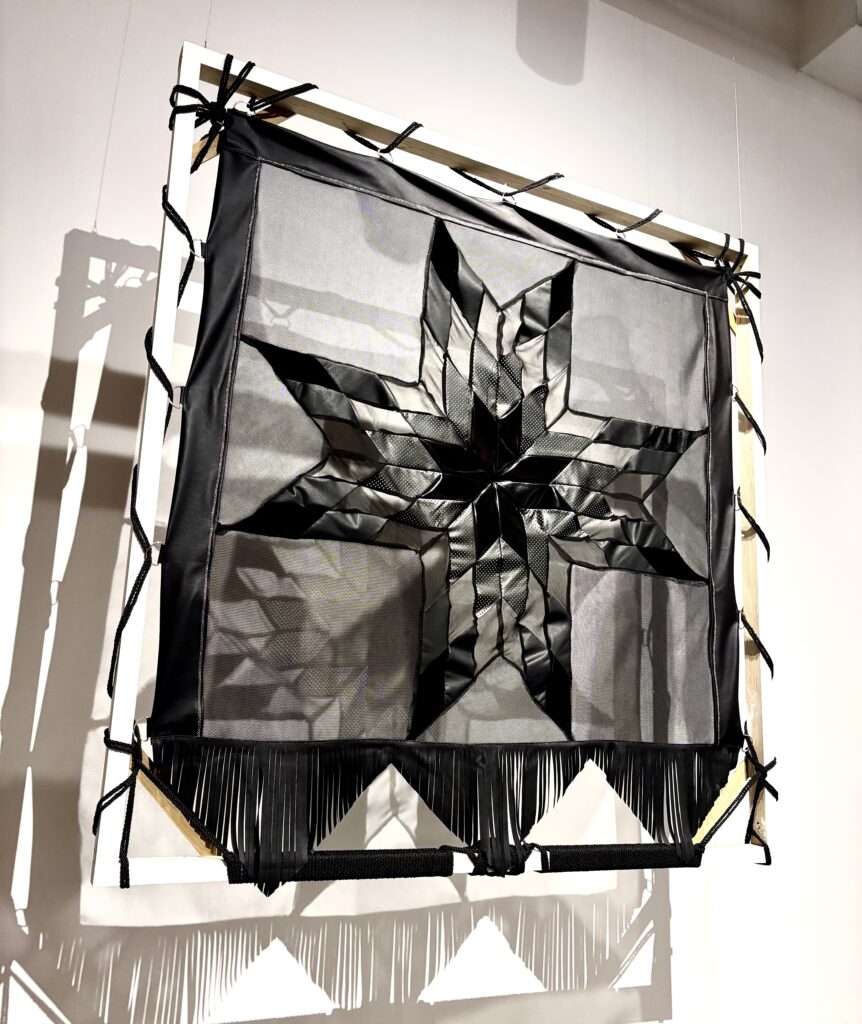
ᐸᑭᑎᓂᑳᓱᐤ pakitinikâsow (they have permission and are released) reimagines the starblanket as both a sacred cultural form and a site of personal and political reclamation. Starblankets are traditionally gifted to mark care, kinship, and life transitions; in this work, that gesture is turned inward. The blanket is made as an offering to myself—honouring who I have been, while affirming who I am now.
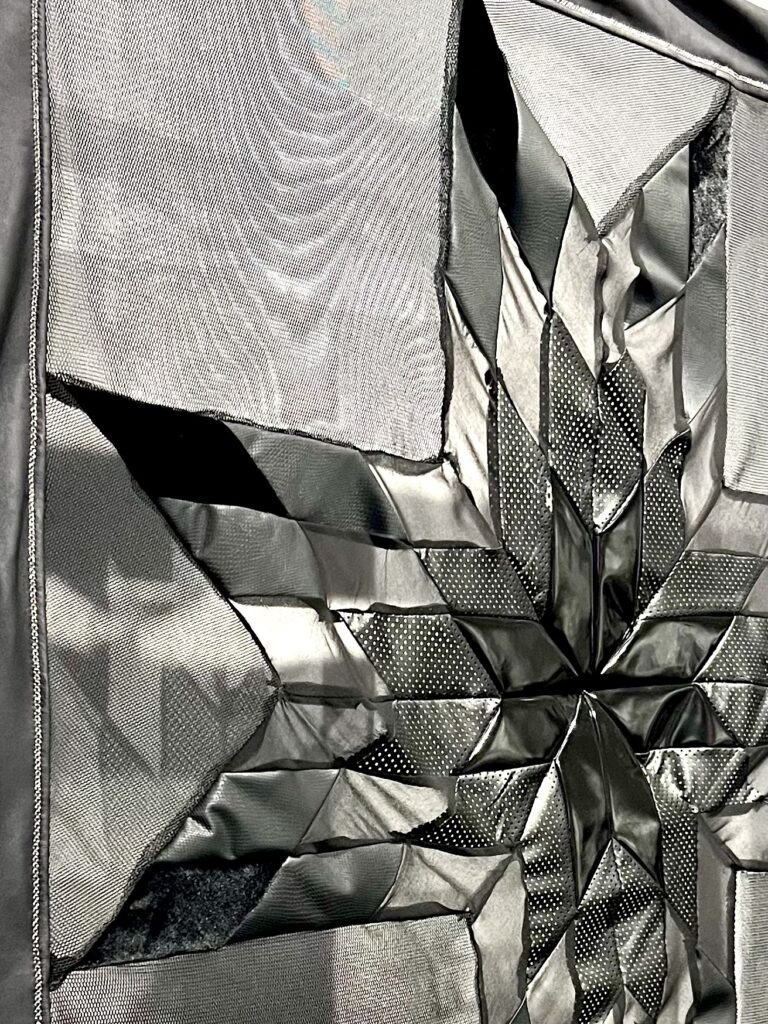
Constructed at a large scale using materials associated with kink and queer subcultures – leather, PVC, mesh, lace, nylon, and shibari rope – the work brings together softness and restrained, protection and exposure, devotion and desire. These materials carry histories of taboo, pleasure, and survival, and are intentionally woven into a form that is culturally resonant and spiritually grounded. By doing so, the work refuses the false separation between Indigeneity and sexuality, insisting that eroticism, care, and sovereignty can coexist.
As an abuse survivor, this work emerges from a desire to reclaim parts of myself that were once punished for being visible. The use of black – often associated with my own presentation – grounds the work in lived experience, connecting personal identity to a form traditionally associated with warmth, ceremony, and protection. The blanket becomes a site of embodied permission: to take up space, to feel desire without shame, and to exist fully.
ᐸᑭᑎᓂᑳᓱᐤ pakitinikâsow (they have permission and are released) holds tension rather than resolution. It is both armour and offering, tender and defiant. It asks what it means to give care to oneself, and how cultural forms can expand to hold queer, disabled, and survivorship-centered ways of being. Ultimately, the work is an act of refusal and celebration—a declaration that survival, pleasure, and spirituality are not opposing forces, but deeply intertwined.
pakitinikâsow reimagines the starblanket as both a sacred cultural form and a site of personal and political reclamation. Starblankets are traditionally gifted to mark care, kinship, and life transitions; in this work, that gesture is turned inward. The blanket is made as an offering to myself—honouring who I have been, while affirming who I am now.
Constructed at a large scale using materials associated with kink and queer subcultures – leather, PVC, mesh, lace, nylon, and shibari rope – the work brings together softness and restrained, protection and exposure, devotion and desire. These materials carry histories of taboo, pleasure, and survival, and are intentionally woven into a form that is culturally resonant and spiritually grounded. By doing so, the work refuses the false separation between Indigeneity and sexuality, insisting that eroticism, care, and sovereignty can coexist.
As an abuse survivor, this work emerges from a desire to reclaim parts of myself that were once punished for being visible. The use of black – often associated with my own presentation – grounds the work in lived experience, connecting personal identity to a form traditionally associated with warmth, ceremony, and protection. The blanket becomes a site of embodied permission: to take up space, to feel desire without shame, and to exist fully.
ᐸᑭᑎᓂᑳᓱᐤ pakitinikâsow (they have permission and are released) holds tension rather than resolution. It is both armour and offering, tender and defiant. It asks what it means to give care to oneself, and how cultural forms can expand to hold queer, disabled, and survivorship-centered ways of being. Ultimately, the work is an act of refusal and celebration—a declaration that survival, pleasure, and spirituality are not opposing forces, but deeply intertwined.
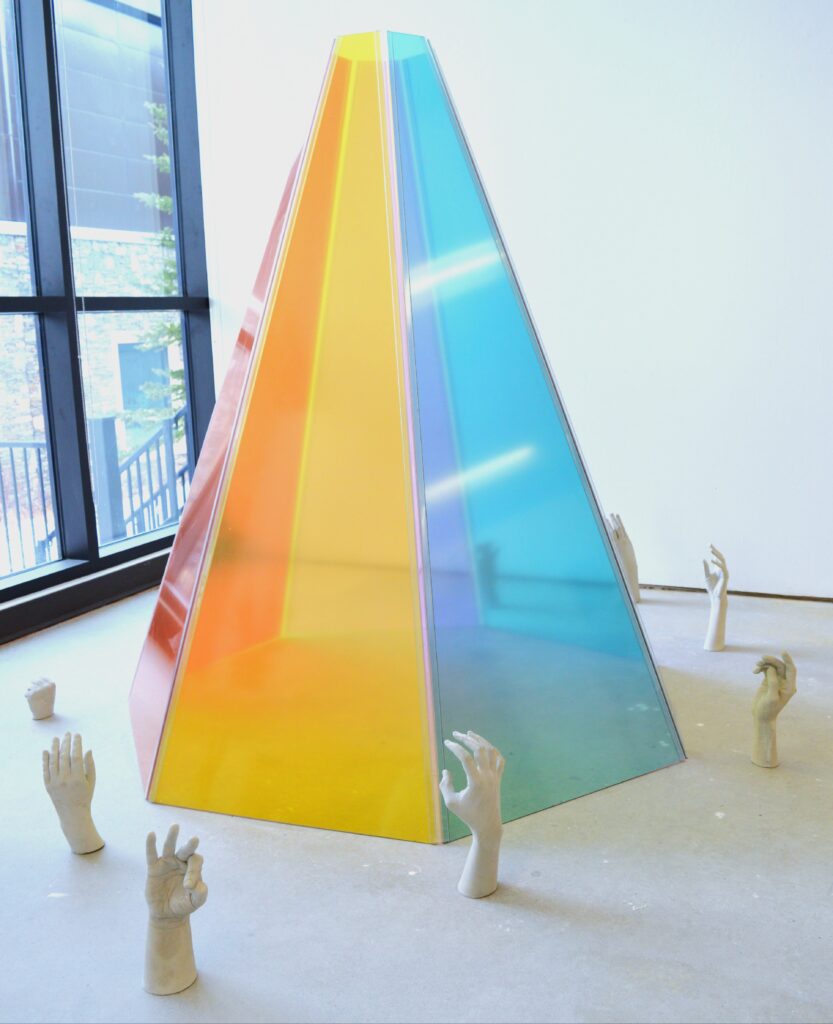
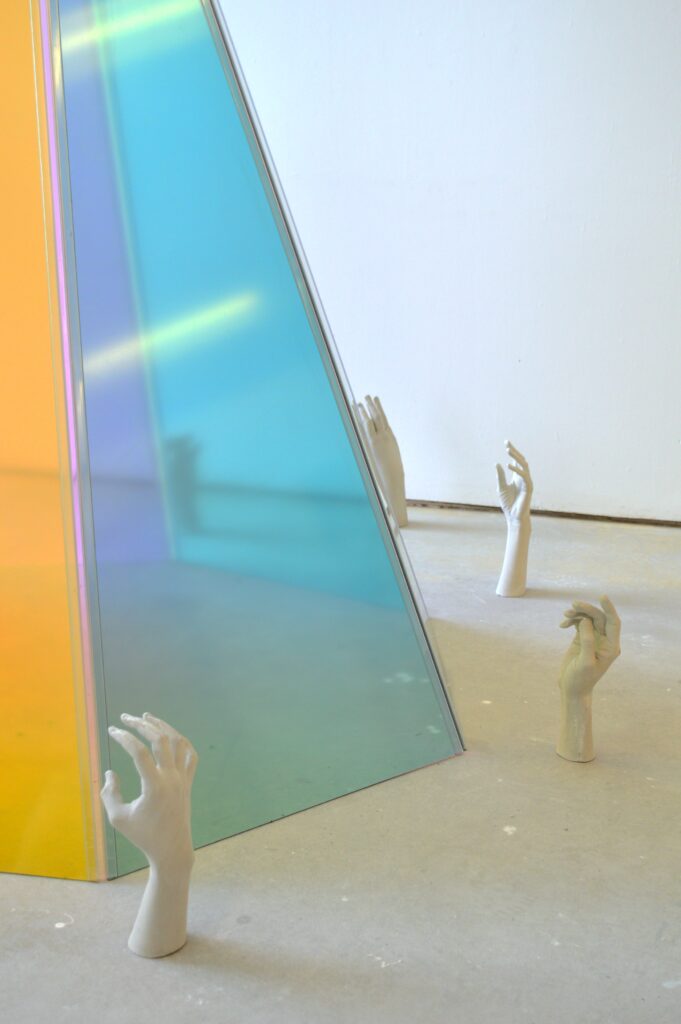
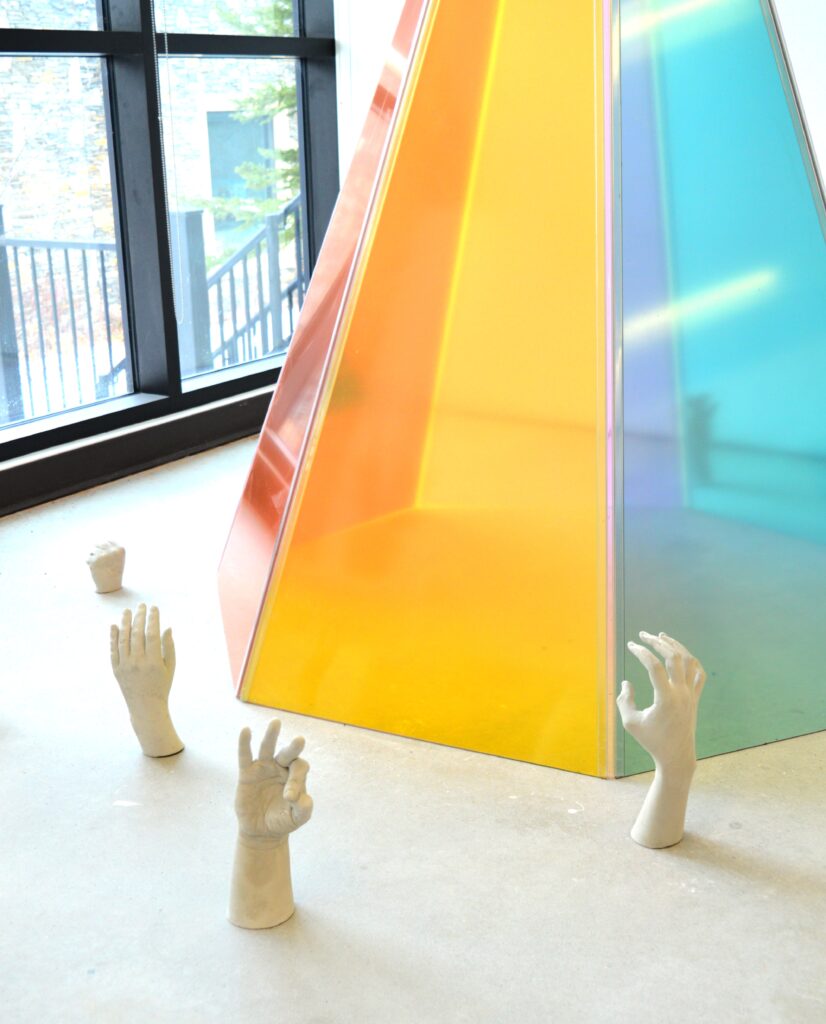
sipikiskisiwin is a large-scale installation grounded in Indigenous futurism, queer world-building, and disability justice. The work asks what it means to imagine the future while remaining accountable to memory, ancestry, and the networks of care that make survival possible. It brings together sculpture, beadwork, and installation to honour community as both inheritance and infrastructure.
At the centre of the work is a spirit lodge surrounded by slip-cast hands, taken from friends, family, and community members who have shaped my life, who each represent one of the nehyiaw tipi teachings. The installation holds deliberate tension. Stone-like hands appear to emerge from the ground, evoking ancestral presence rather than absence. Bright, queer colour sits alongside weight and stillness, resisting narratives that frame Indigenous, disabled, and queer lives as either tragic or purely celebratory. Instead, the work insists on complexity: joy shaped by survival, futurity rooted in memory, and softness held alongside endurance.
Ultimately, sipikiskisiwin is about collective authorship. It imagines futurity not as escape, but as something built together—through hands held open, stories shared, and responsibilities remembered. The work asserts that Indigiqueer and disabled futures are not speculative; they are already here, carried forward by community, memory, and refusal.
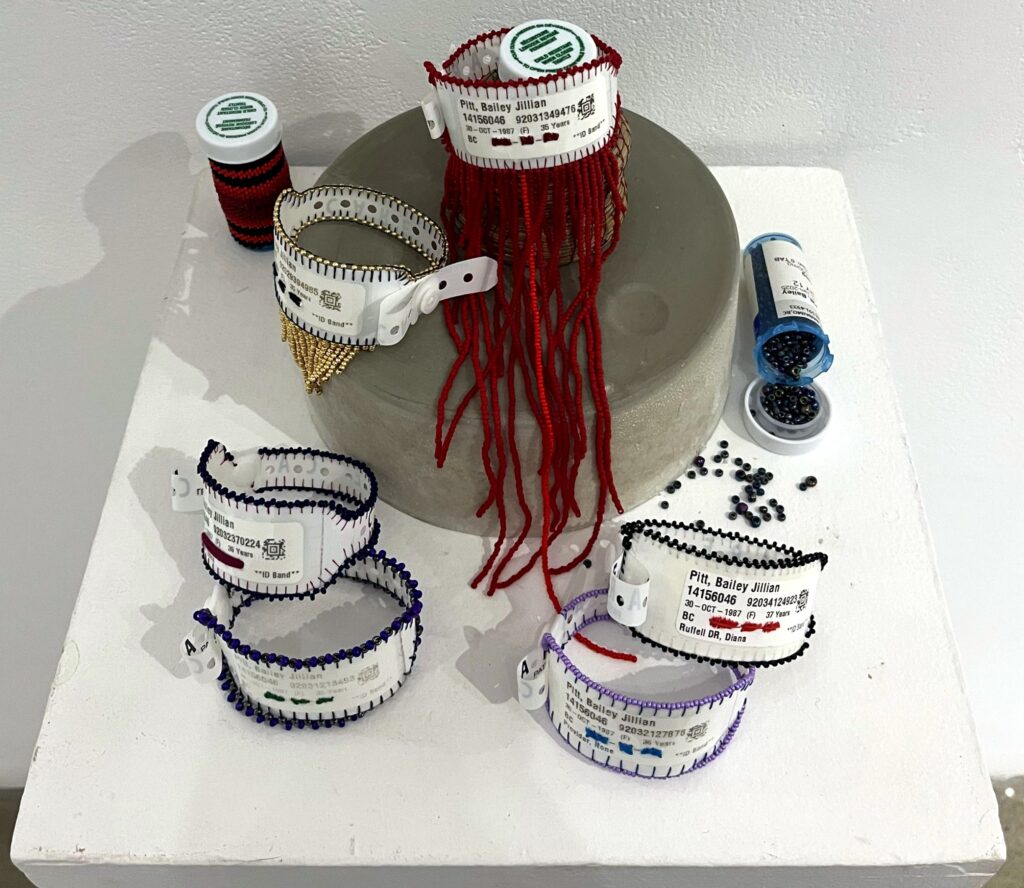
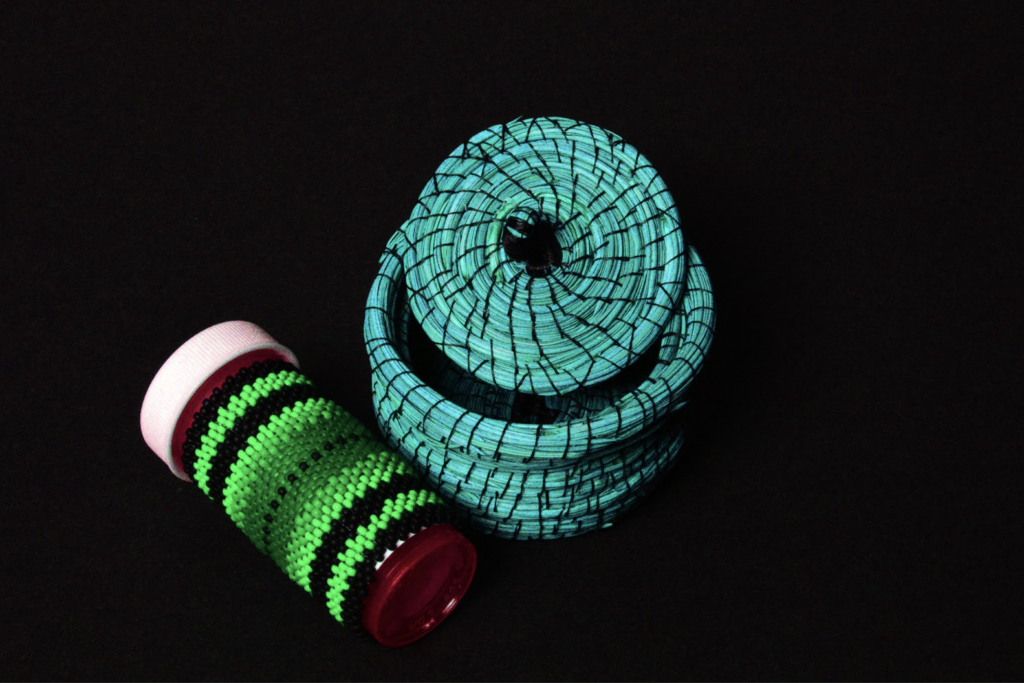
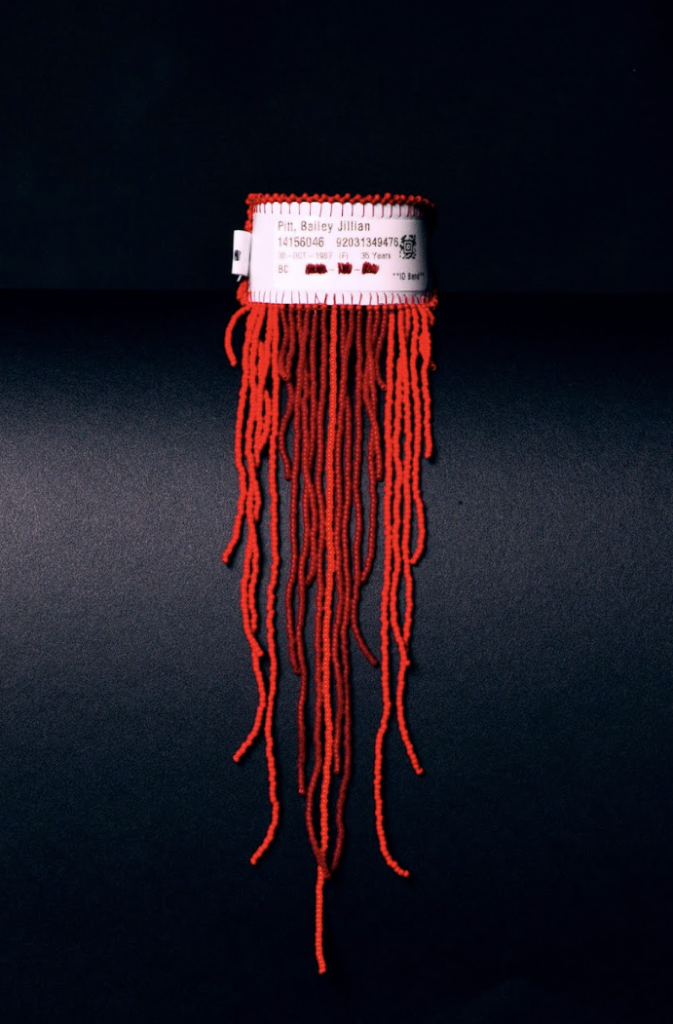
sâkohtwâw is a body of work that confronts the intimate violence of medical and institutional systems and reclaims them through Indigenous, queer, and disabled presence. The work consists of six beaded hospital bracelets accumulated over two years of disability-related care, alongside two large-scale photographs: one depicting a beaded hospital bracelet bearing my deadname, and another showing a beaded prescription pill bottle paired with a pine needle basket.
Hospital bracelets and prescription containers are designed to reduce the body to data—to categorize, surveil, and control. For Indigenous and disabled people, these objects often carry misrecognition, erasure, and harm, marking moments when autonomy and dignity are compromised. By beadworking these items, I intervene in that process. The slow, deliberate labour of beading transforms objects of vulnerability into acts of agency, turning medical artifacts into sites of refusal, survival, and care.
The photographs adopt a stark, sterile visual language: black backgrounds, controlled lighting, and an almost clinical precision. This aesthetic intentionally echoes the conventions of museum display and archival documentation—systems that have historically extracted, classified, and contained Indigenous bodies and material culture. By placing these reclaimed objects within that visual framework, I assert control over the terms of visibility. The museum lens is not rejected, but taken up, reworked, and claimed as my own.
In this recontextualization, the photographs function as a form of rematriation. Objects that once signified surveillance, deadnaming, misgendering, and institutional power are presented with care, scale, and authority. What was once evidence of harm becomes evidence of survival. The sterile becomes intentional. The archive becomes personal.
sâkohtwâw insists that survival is not passive. These works honour the endurance required to move through systems not built for Indigenous, queer, or disabled bodies, while asserting the right to self-definition and cultural continuity. Victory here is not conquest, but persistence—the ongoing act of reclaiming how we are seen, named, and remembered.
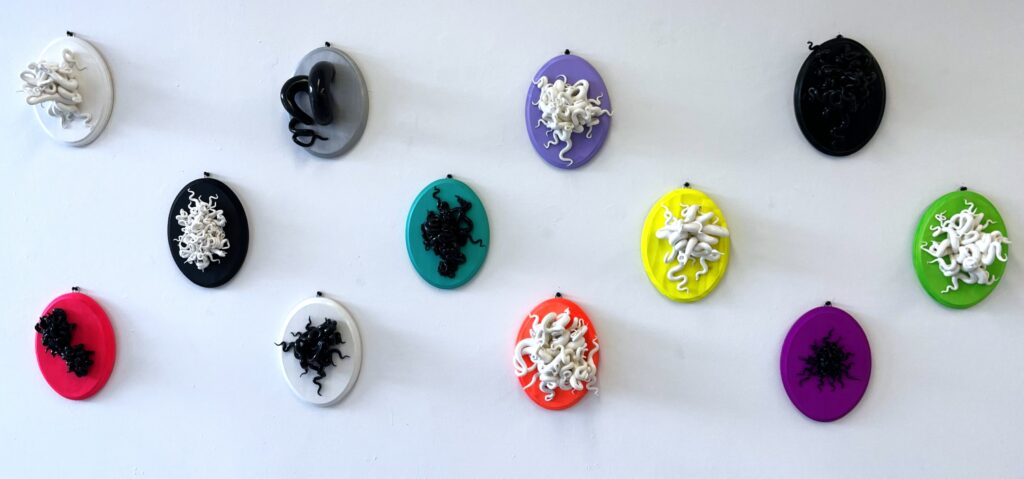
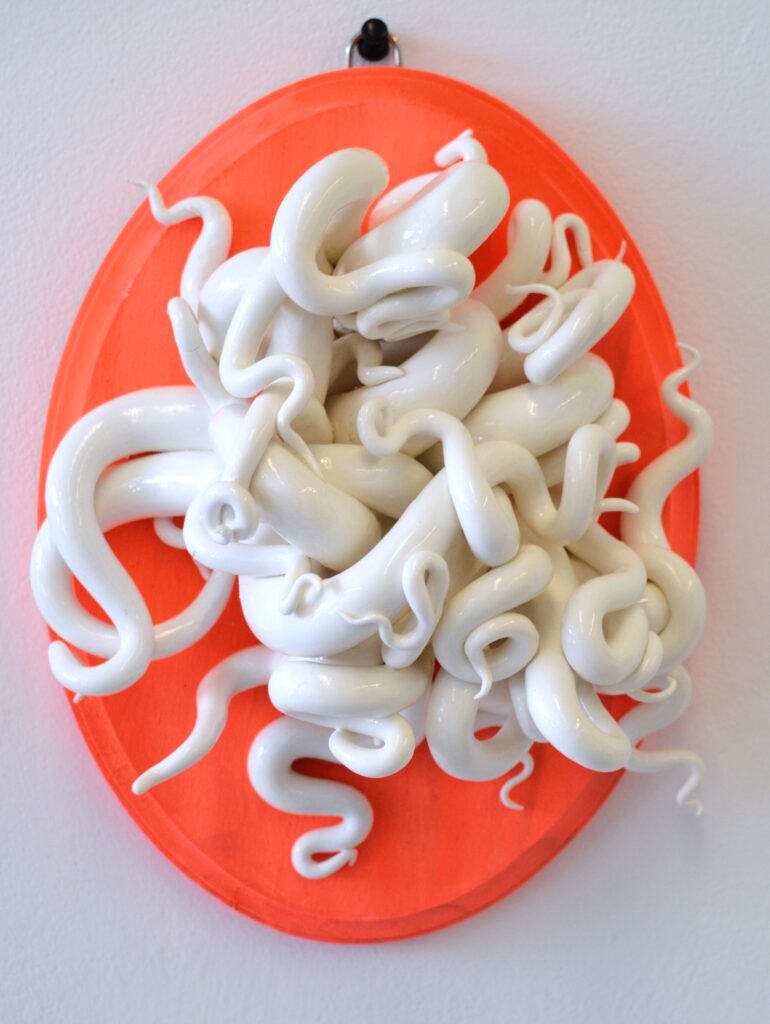
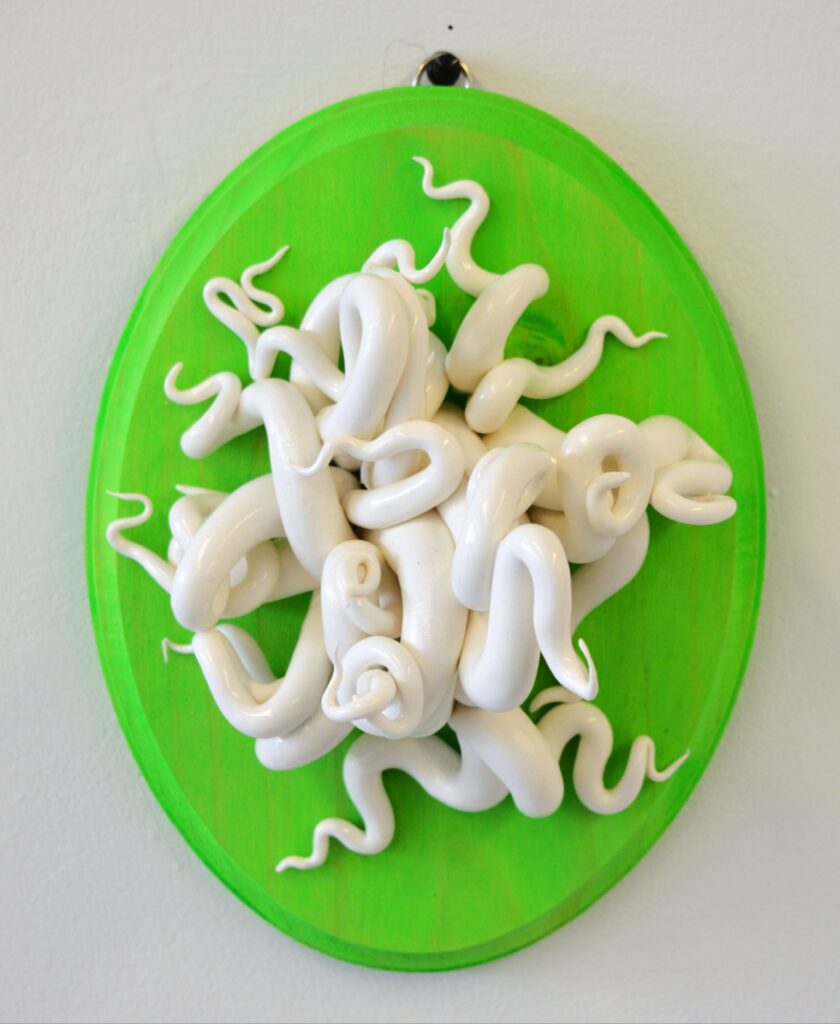
Aesthetic Discomfort is a 12-part installation of black-and-white, tentacle-like forms mounted on vibrant, colored wooden ovals. These pieces explore the tension that arises when identity challenges societal expectations. They reflect the many facets of my experience—queer, neurodivergent, disabled, Indigenous, and gender-expansive—and the ways these aspects of self can unsettle normative perceptions.
Rather than seeking to make that tension comfortable or easily digestible, the work asks viewers to sit with the discomfort, to encounter the complexity and resilience inherent in these intersecting identities. The contrast between the stark forms and the bright backgrounds mirrors the interplay between vulnerability and strength, uncertainty and joy.
Through Aesthetic Discomfort, I aim to create a space where the unsettling becomes generative: a place to witness, reflect, and find beauty and empowerment in the parts of ourselves that society often deems difficult or invisible.
October 23 – November 10, 2023 at Vancouver Island Regional Library & January 23 – February 16, 2024 at The View Gallery
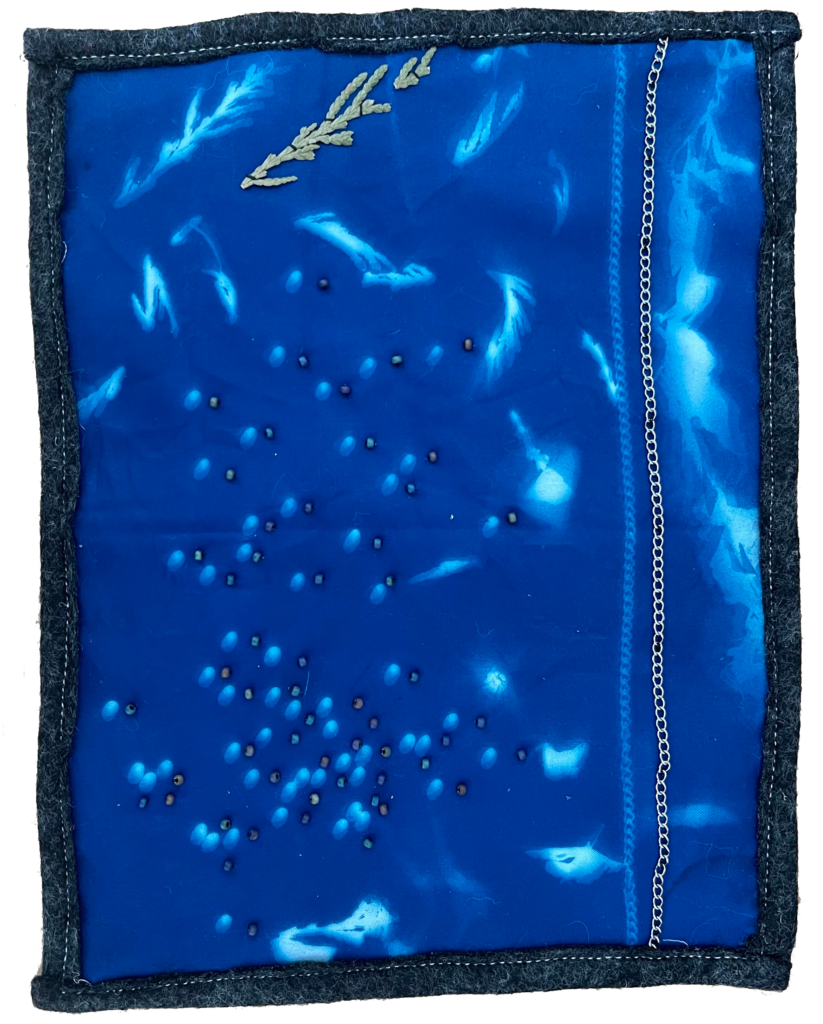
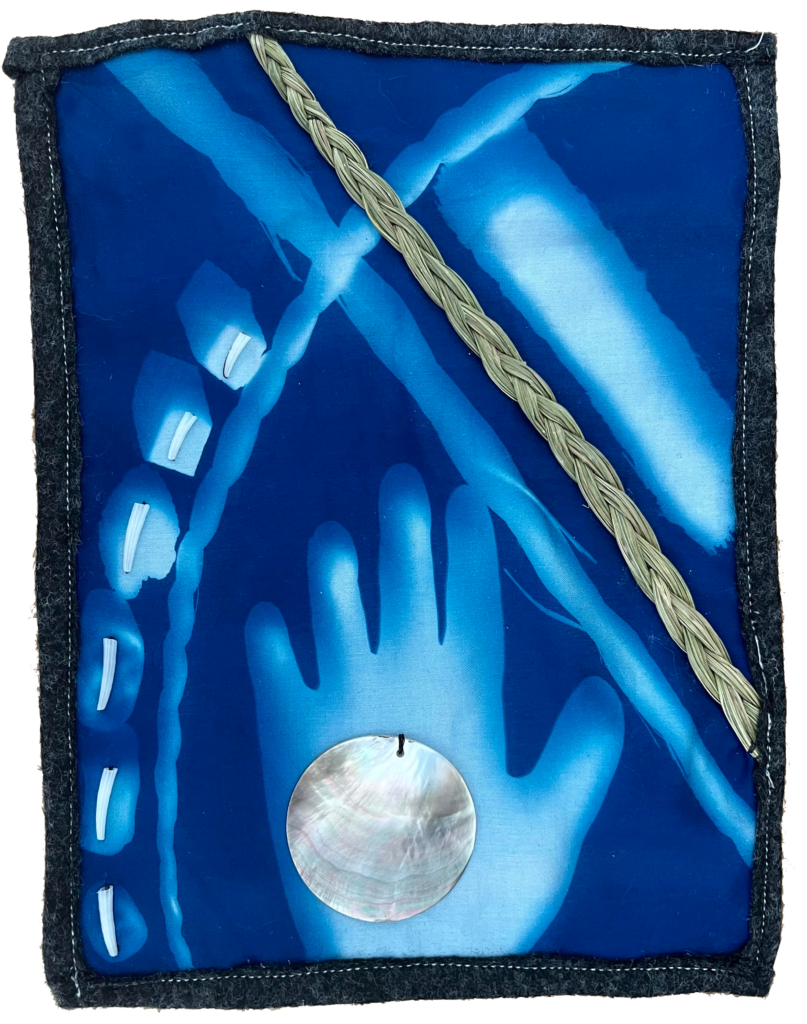
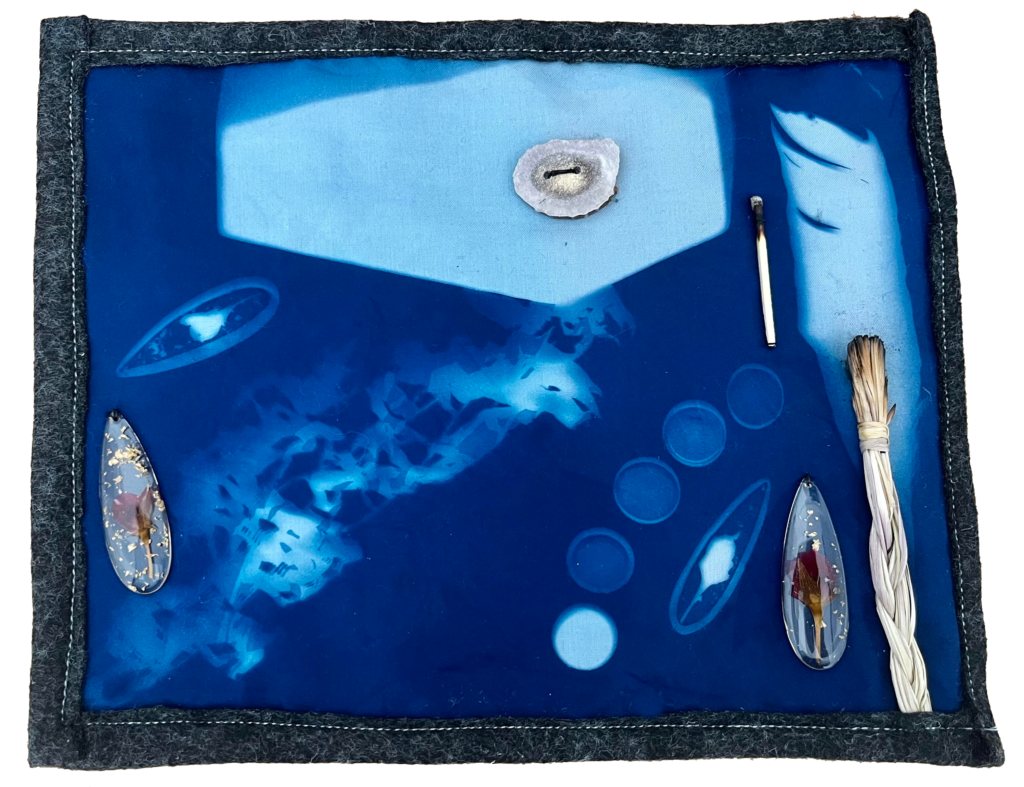
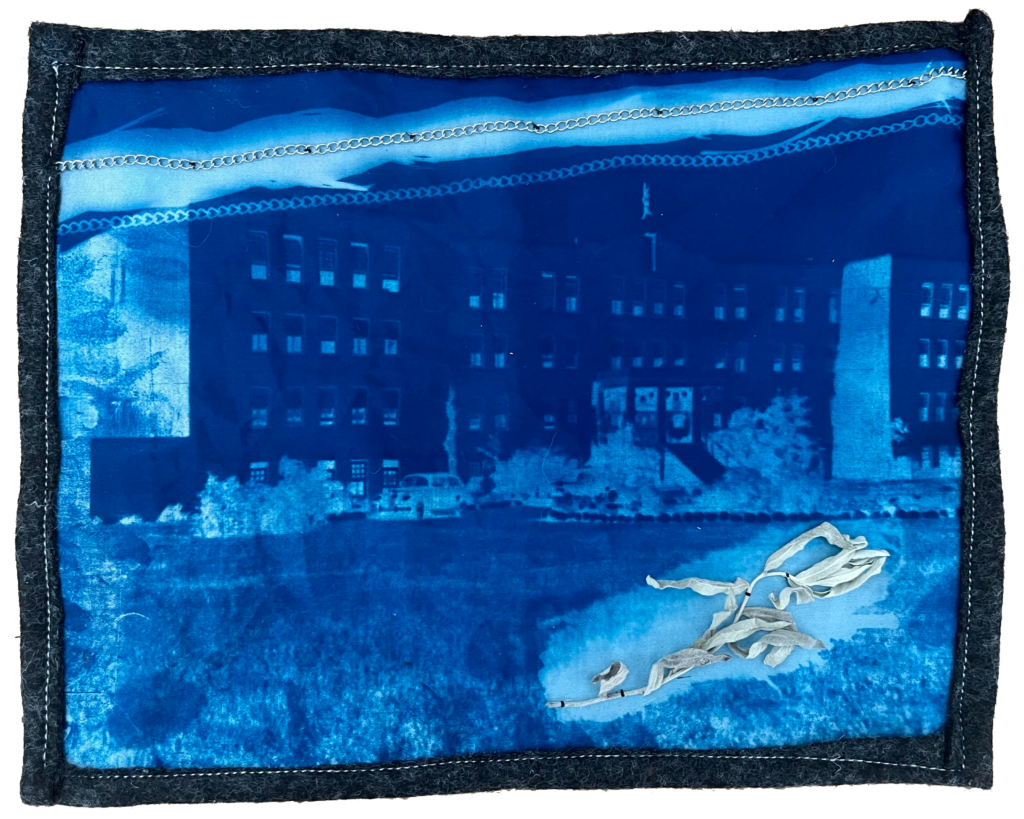
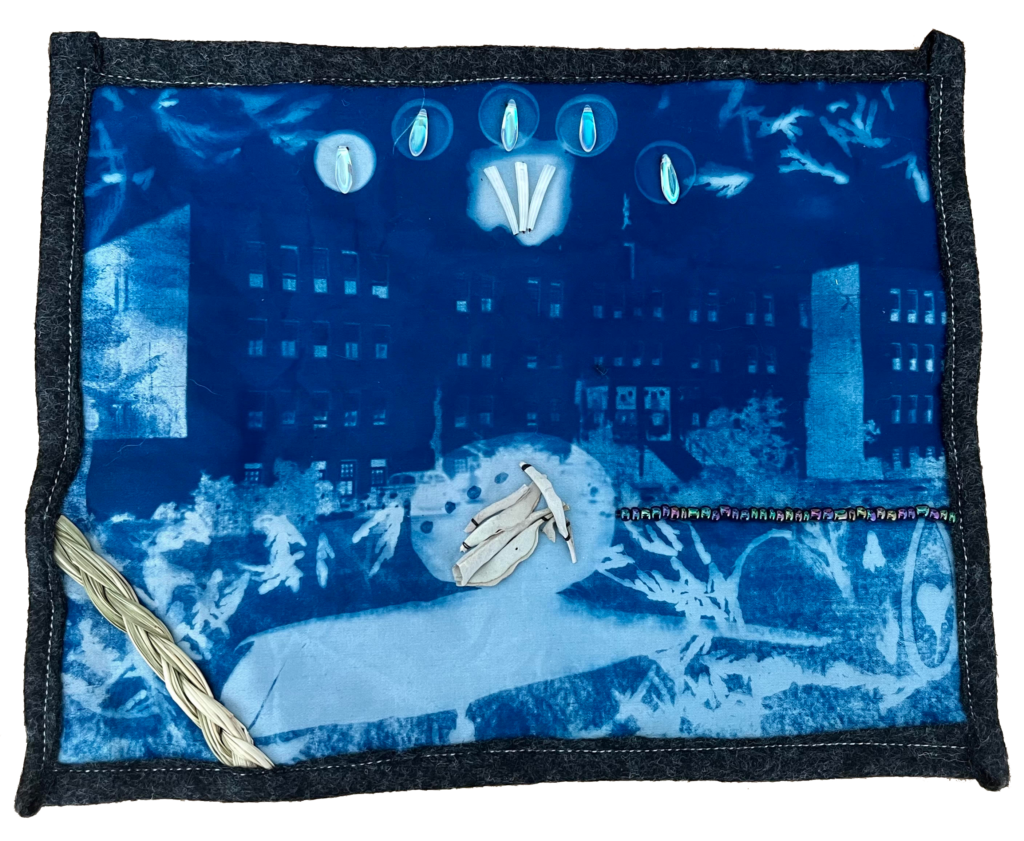
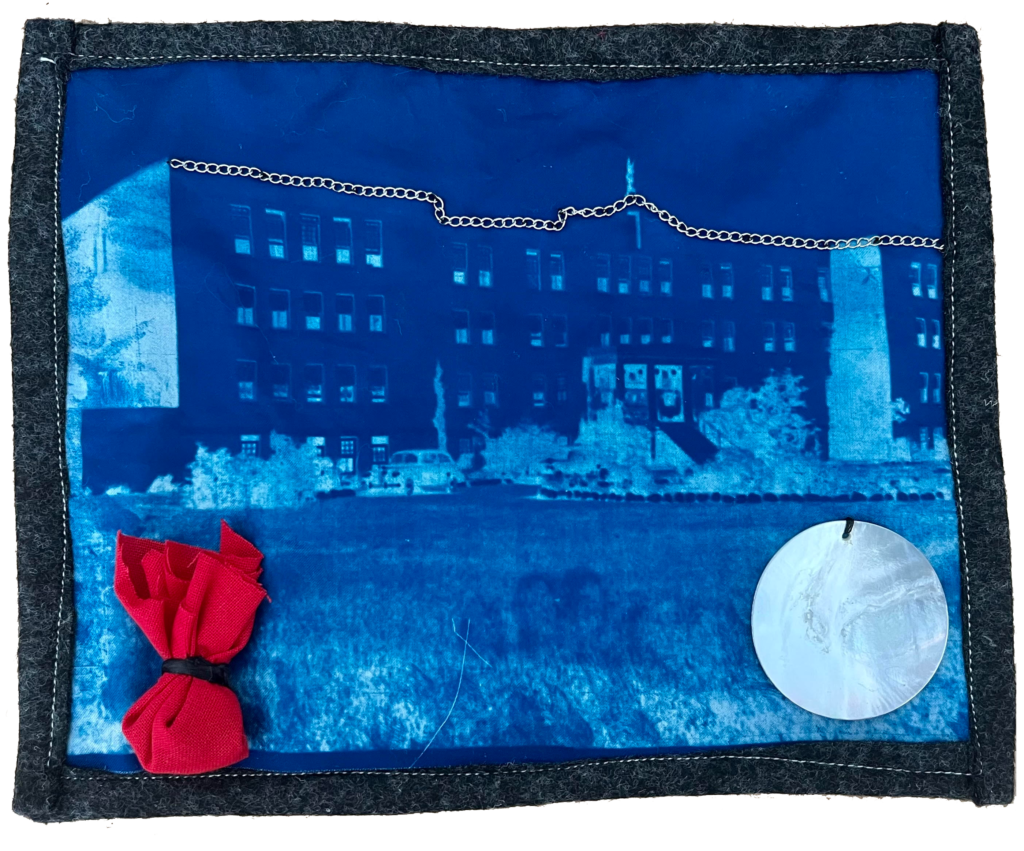
This exhibition presents a six-part sequential series of cyanotype textile pieces that explore themes of healing, grief, family, and intergenerational connection. The works serve as a meditation on the process of healing intergenerational trauma and moving through the personal loss of my grandmother. They also reflect an attempt to honor her existence beyond the trauma she experienced, recognizing her as a whole, independent person.
What began as an exploration of the cyanotype process quickly evolved into a deep reflection on the role my grandmother played in our family and her life beyond the painful experiences she endured. Central to the creation of these pieces were sacred medicines and cultural objects, including beads, dentalium, chaga, and abalone, each of which was used with intention. The act of smudging became integral to the process, allowing the works to take on a ceremonial aspect.
Textile work holds particular significance in these pieces, as nôhkompan taught me how to sew, quilt, and knit. These skills not only shaped the physical structure of the pieces but also formed a deeper connection between the content and creation. In the making of this series, I felt her presence guiding my hands, and I began to realize that although I had not initially intended to address her experience in residential school, the subject emerged naturally. This realization led me to understand that there is a path through pain, one that can lead to healing, release, and transformation—something I believe nôhkompan herself would find peace in.
These works are deeply personal, imbued with love, patience, and an understanding of a complex matriarch whose absence has left a profound and evolving impact on our family.
Click Here to Read Exhibition Zine
March 2, 2024 — March 24, 2024 at The Polygon
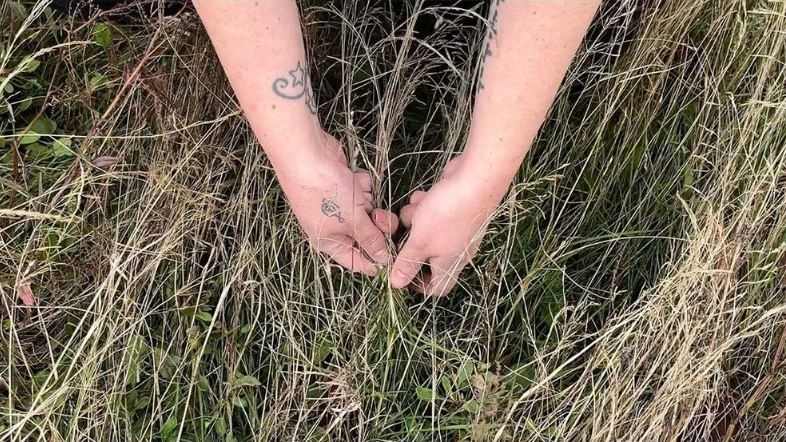
Response: All Woven Together is the culmination of the Response program, an annual film program at The Polygon that inspires ways of responding artistically to historical and contemporary Indigenous ways of being. Participants engaged in a series of workshops led by Indigenous artists and Knowledge Holders during the summer of 2023 to produce an original video work that was exhibited in The Polygon’s Seaspan Pavilion from March 2–March 24, 2024.
Inspired by the depth of connection that is felt through shared stories and experiences, participants were encouraged to engage with the theme of interconnection in ways that consider the relationships we hold, and the strength, reciprocity, and care that can be derived from them.
The approaches that are presented express individual experiences that are rooted in a collective history, each lending consideration to the communities – past, present, and future – that shape the stories we tell. From meditations to monologues, these works reflect on themes of grief, compassion, and memory in ways that honour the relationships that have brought us to where we are, here and now.
In a time of instantaneous connection and communication, our networks are expanding with unprecedented speed and complexity. All Woven Together asks us to slow down and reclaim our narratives with care and contemplation.
ᒪᐃᐧᐦᑲᑕᒧᐃᐧᐣ mawihkatamowin (mourning) may be simply described as mourning, though its true meaning is found in the act of crying after experiencing a loss close to your heart. Celebration becomes an act of mourning, the panic of watching those who matter most to us slip away, and the heartbreak of knowing why we’re here.
“This film was intended to be a celebration of connection – to community, the land, and our culture – yet it became a challenge to tell that story without emphasizing the ongoing conflict of living in a colonial, capitalist system that desperately attempts to sever us from those things.” – bailey macabre
About The Artists
Gordon Brent Brochu-Ingram is a Métis environmental and multimedia artist who grew up in a W̱SÁNEĆ community in Central Saanich, BC. His traditional and contemporary practice revolves around intercultural conversations on land, Indigenous ecological legacies, and public spaces.
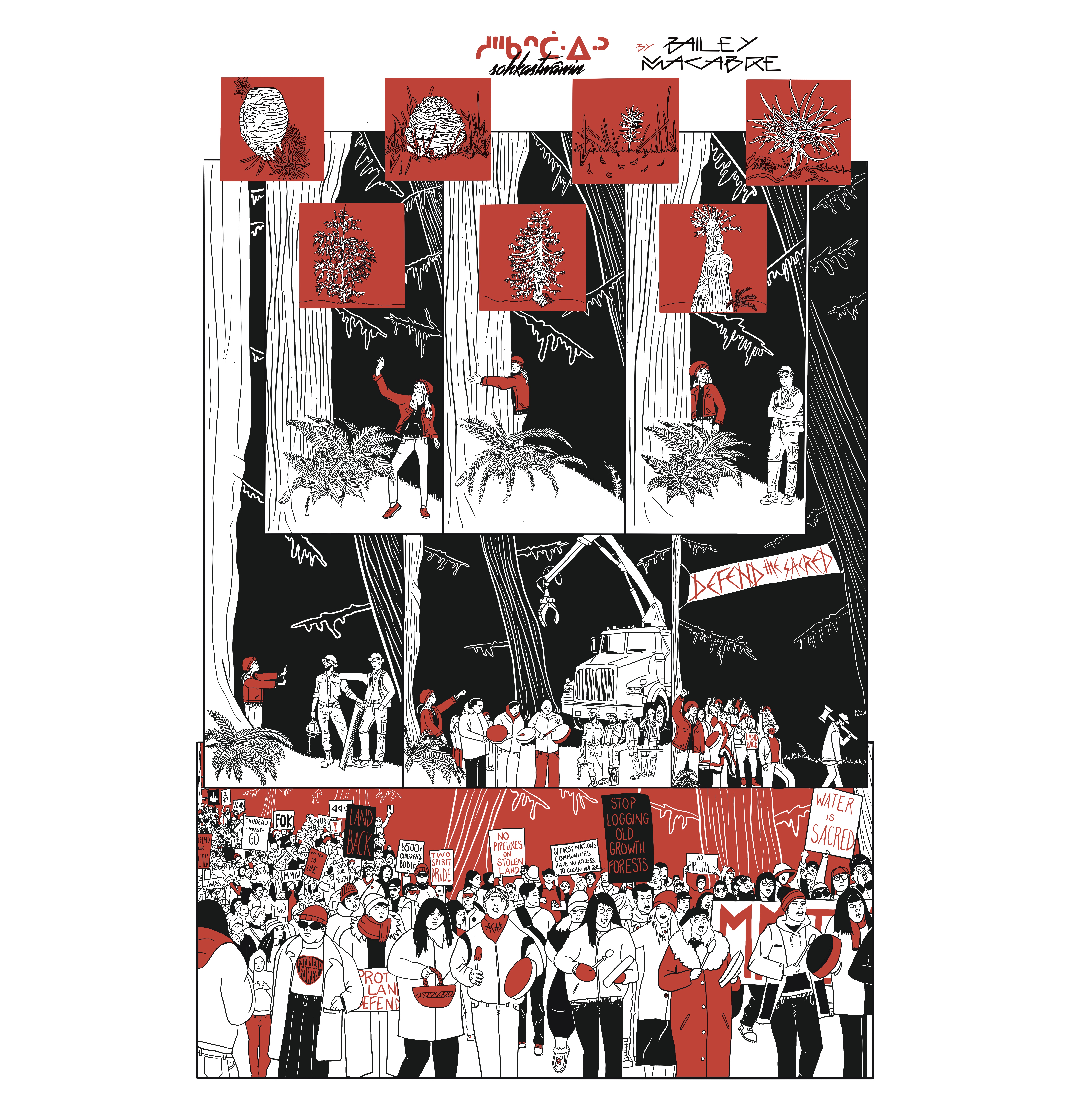
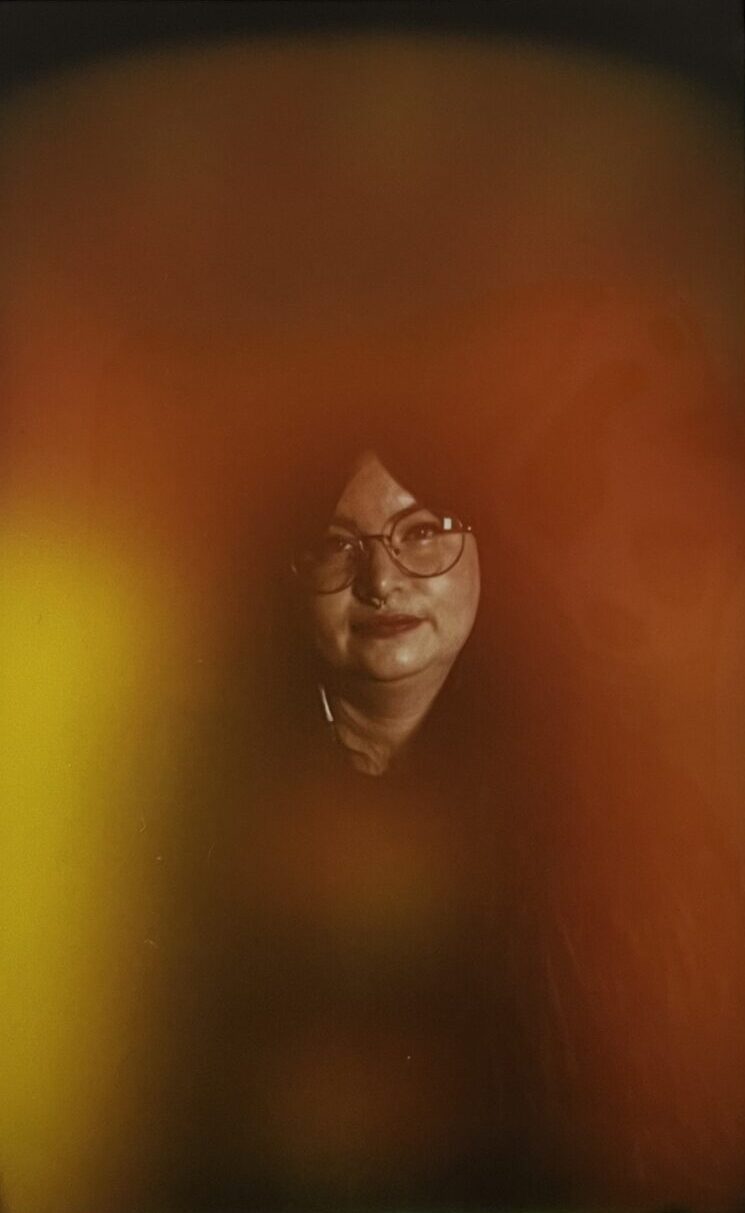
bailey macabre is a self-taught multidisciplinary artist whose practice celebrates Indigenous laughter and queer joy. Themes of identity and community are showcased in their work through a passion for bright colours.
Dana Justine Belcourt is a Cree interdisciplinary artist from Amiskwaciwâskahikan. Specializing in painting, poetry, and video, their work involves themes of love, Indigeneity, and relationships.
Jessey Tustin is an emerging multimedia artist whose exploratory practice is focussed on continuously expanding their experience and knowledge. They are currently pursuing their BFA in Illustration at Emily Carr University of Art + Design.
M.V. Williams is a Sḵwx̱wú7mesh and Wet’suwet’en Two-Spirit, photo-based artist. Their work focuses on memory, personal narrative, and documentation.
Red Buffalo Nova Weipert is an Anishinaabe Ojibwe Two-Spirit and transgender interdisciplinary artist, writer, director, educator and storyteller from Treaty 1 Territory. Their practice weaves together digital and traditional mediums with storytelling as the driving force behind their work.
Priscillia Mays Tait is a Babine, Gitxsan, and Wet’suwet’en mother, activist, writer, and performance artist who grew up in Moricetown, BC with paternal grandparents, Sarah and Thomas Tait. Priscillia is actively involved with the DTES community.
July 15, 2023 – September 24, 2023 at Nanaimo Art Gallery
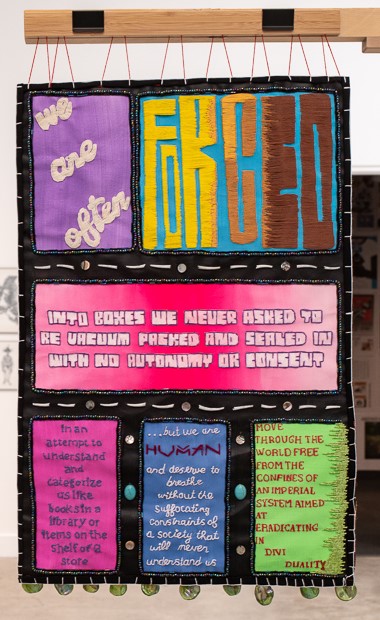
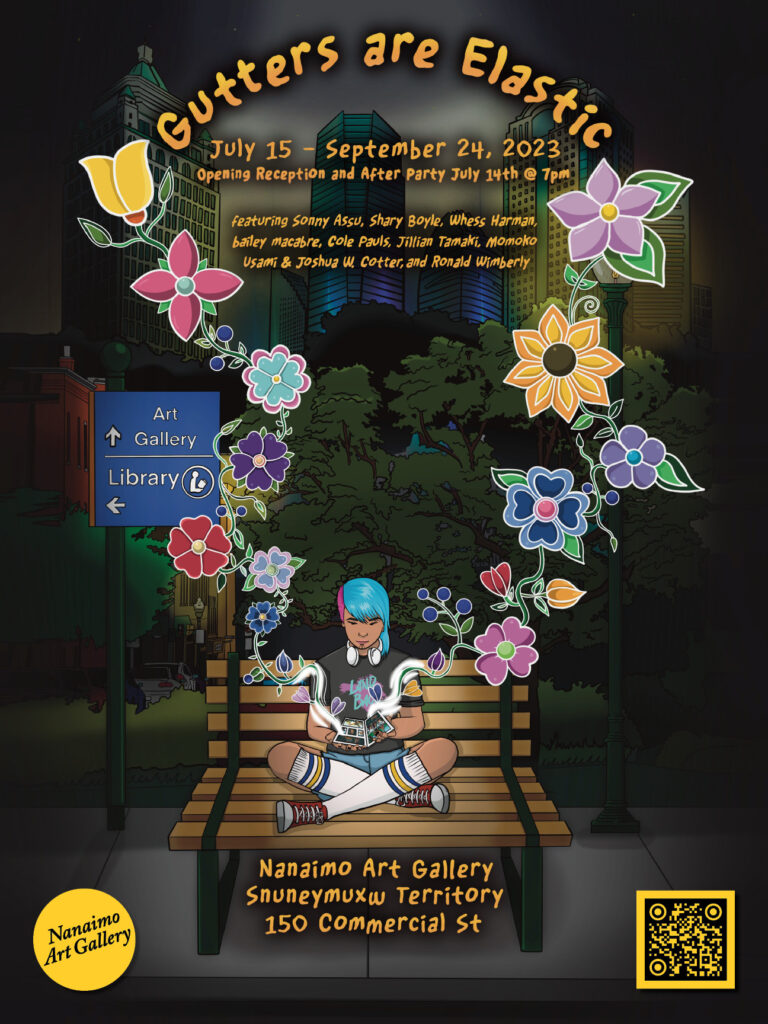
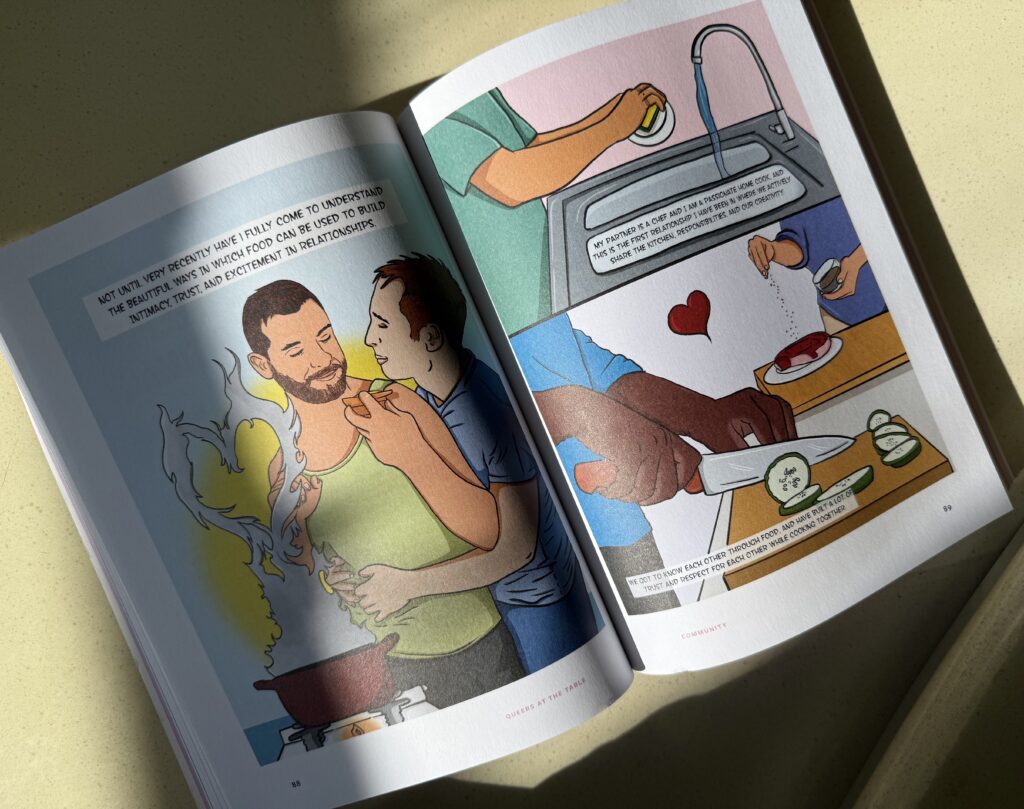
Gutters Are Elastic is a group exhibition that takes an expanded view on what comics and graphic novels can be: amorphous and empowering things that don’t sit still. This project sees the gutter (the space between the frames in a comic) as a generative site of possibilities where readers insert their own perspectives. This elastic gutter centers the margins, while stretching the story off the page and into the physical space of the Gallery. From ceramic busts to handmade quilts, visitors experience artworks that are linked to comics and graphic novels through a wide range of media. The exhibition features artists from diverse backgrounds and perspectives including Sonny Assu, Shary Boyle, Whess Harman, bailey macabre, Cole Pauls, Jillian Tamaki, Momoko Usami & Joshua W. Cotter, and Ronald Wimberly.
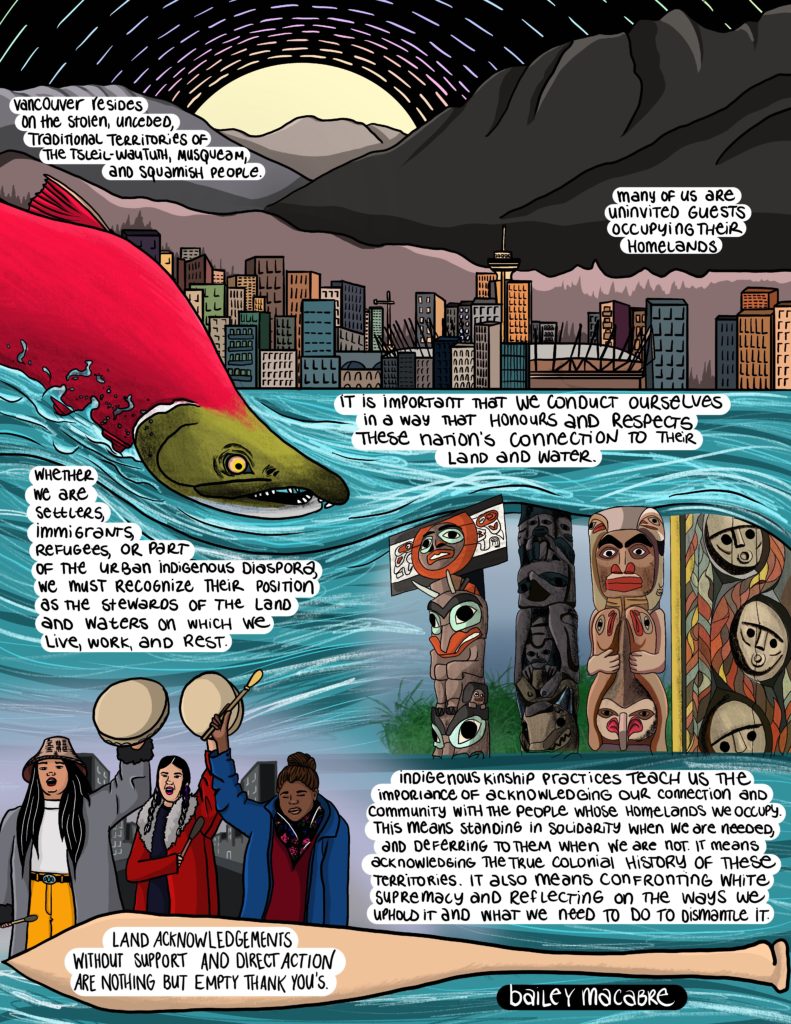
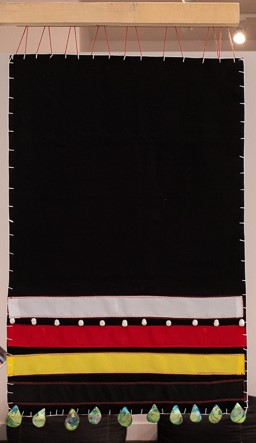
ᑳᓃᒥᐦᐃᑐᒋᐠ kânîmihitocik (the ghost dancing in the skies) is an embroidered, text based comic which adapts the aesthetics of a ribbon skirt into a work that speaks to the complexity of identity, ethnicity, culture, and the limitations of existing within an imperial system.
February 5 – April 30th 2022 at open space
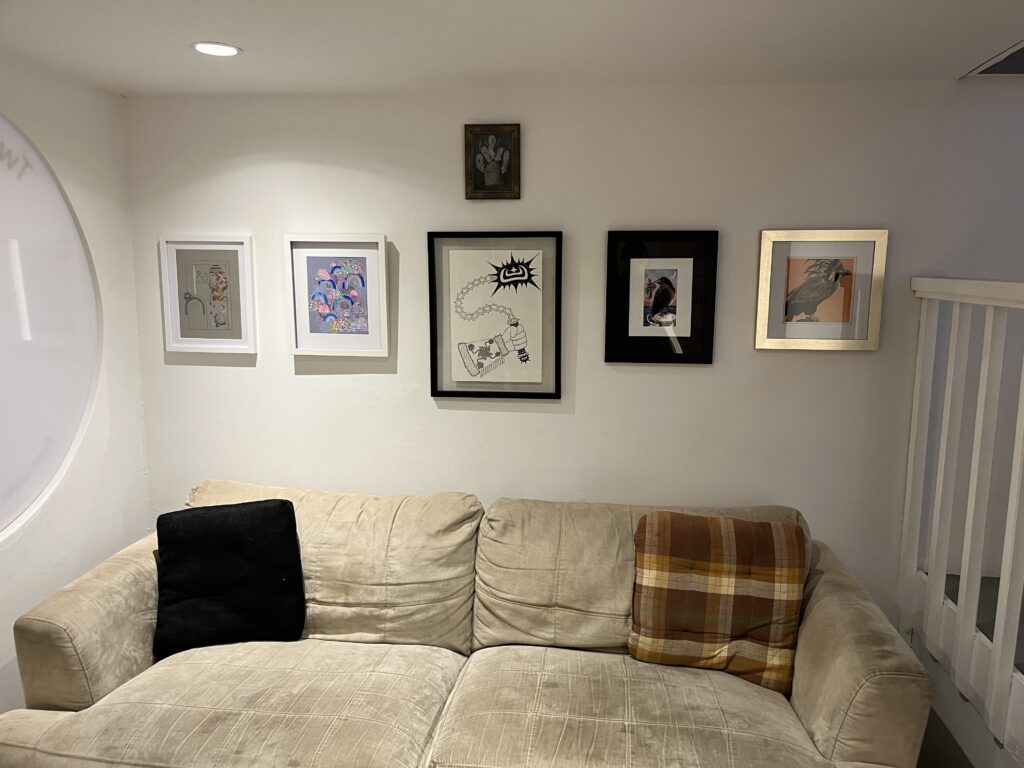
This mini-exhibition within the exhibition chew the bones, they’re soft, invited contributors from the forthcoming zine and giveaway package to show some of their work. A shoal is formed by a group of multiple, complimentary fish species, who move together both to confuse predators, but also to allow one another to rest by riding in each other’s slipstreams to conserve energy.
It featured artworks from bailey macabre, Cole Pauls, Kirsten Hatfield, Hue Nguyen, and Melissa Pipe. Whess Harman has worked with each of these artists in varying capacities through the years and considers their friendships and work to be entwined with how they’ve been shaped as an artist.